Meg’s Monthly Book Pick: October

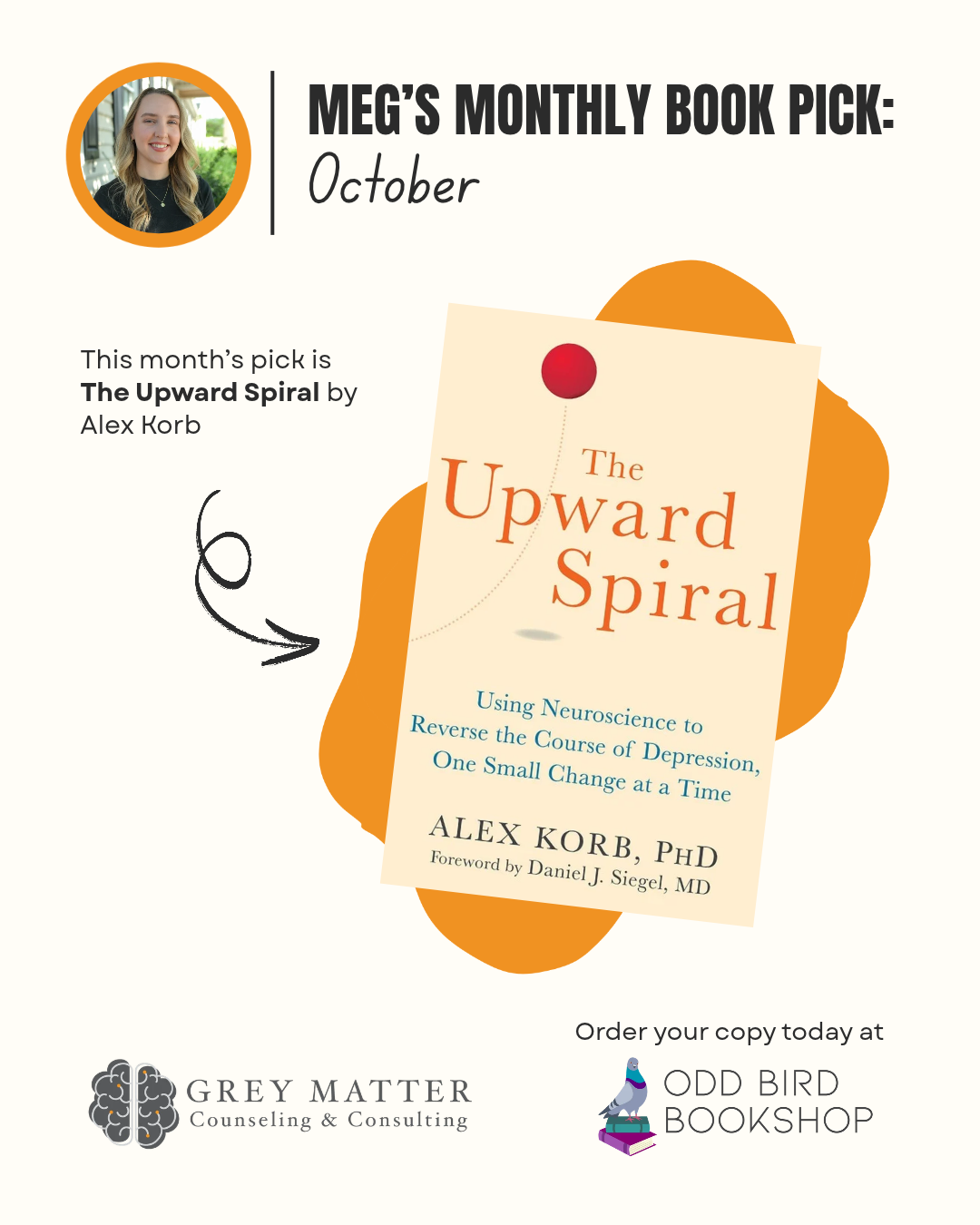
Title: The Upward Spiral
Author: Alex Korb
Summary
Korb explains that depression can feel like a downward spiral, where symptoms such as negative thinking, lack of motivation, poor sleep, isolation, and stress reinforce one another. Rather than suggesting there is one solution that can immediately make someone feel better, he focuses on the idea that small changes can build on one another. These changes can influence brain activity and gradually create positive momentum. Throughout the book, Korb uses neuroscience to explain the connection between our thoughts, emotions, behaviors, and brain chemistry. He explores topics such as anxiety and worry, negative thinking patterns, habits, motivation, decision-making, sleep, exercise, social connection, and gratitude. His goal is to make neuroscience understandable while showing readers how everyday behaviors can influence the brain.
Key Takeaways
1. Small changes can make a difference.
One of the book's central ideas is that people don't have to completely transform their lives overnight. Simple steps such as getting regular exercise, improving sleep, spending time with others, practicing gratitude, or changing how we respond to negative thoughts, can help create momentum toward positive change.
2. The brain can influence our mood, but our behaviors can influence the brain, too.
Korb explains that the relationship between the brain and behavior works in both directions. Changes in behavior can affect brain circuits involved in mood, motivation, stress, and emotion. This is the foundation of his “upward spiral” concept.
3. Depression can reinforce itself.
Korb describes depression as a cycle in which symptoms can contribute to additional symptoms. For example, low motivation may lead someone to withdraw from activities, which can increase isolation and decrease opportunities for positive experiences. Understanding these cycles can help identify places where small interventions may begin to interrupt them.
4. Social connection matters.
The book highlights the importance of positive social interactions and connection. Relationships and meaningful interactions can influence brain systems involved in mood and well-being, making social connection an important part of creating an upward spiral.
5. Self-care has a neurological component.
Korb discusses practical areas such as exercise, sleep, breathing, gratitude, and mindfulness, not simply as general wellness advice, but in terms of how these behaviors can influence neural circuits and emotional functioning.
Who Is This Book For?
I would consider The Upward Spiral a helpful resource for both clients and clinicians. For clients, the book provides an approachable explanation of how depression can affect the brain, thoughts, behaviors, and daily routines, while offering practical strategies that may help create positive changes over time. For clinicians, it can provide useful neuroscience-based perspectives that can complement therapeutic approaches and help explain the connection between behaviors, brain functioning, and mood to clients. Overall, the book is accessible enough for clients while still offering valuable information for mental health professionals, making it a useful resource for both audiences.
Why This Book?
The Upward Spiral is a meaningful read for National Depression and Mental Health Screening Month because it encourages readers to learn more about depression and recognize how it can affect the brain, emotions, behaviors, and everyday life. Alex Korb explains how depression can create a cycle of negative thoughts and behaviors, while also highlighting how small, intentional changes can help create positive momentum. This connects with the importance of mental health screening by encouraging people to pay attention to changes in their mood and well-being and to seek support when they may be struggling. Screening can be an important first step toward recognizing concerns and connecting with appropriate care, while The Upward Spiral offers readers a greater understanding of depression and practical ways to think about moving forward.
How To Order
To purchase The Upward Spiral by Alex Korb, Click Here to order from Odd Bird Bookshop. When placing your order, use code GREYMATTER at checkout to receive 10% off your purchase.